
Improving Facebook Search Experience
TL;DR
Study Overview:
25 1:1 interviews with Facebook users from Vietnam, Myanmar, Egypt, Germany, and Indonesia (5 per country).
Each participant performed 4 search tasks (100 searches total): recent post, local news, an event, and a person.
Participants used their local languages and were asked to think aloud during tasks.
Key Findings:
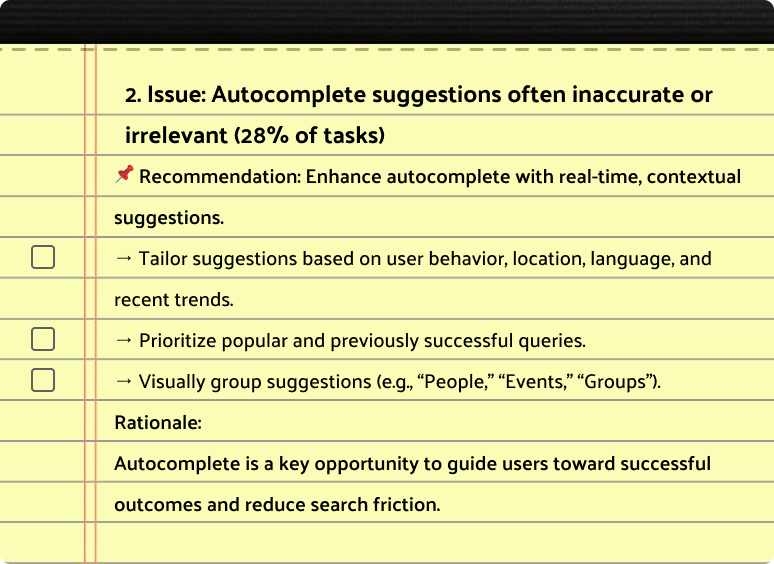
Improve autocomplete accuracy and suggest most-used keywords dynamically.
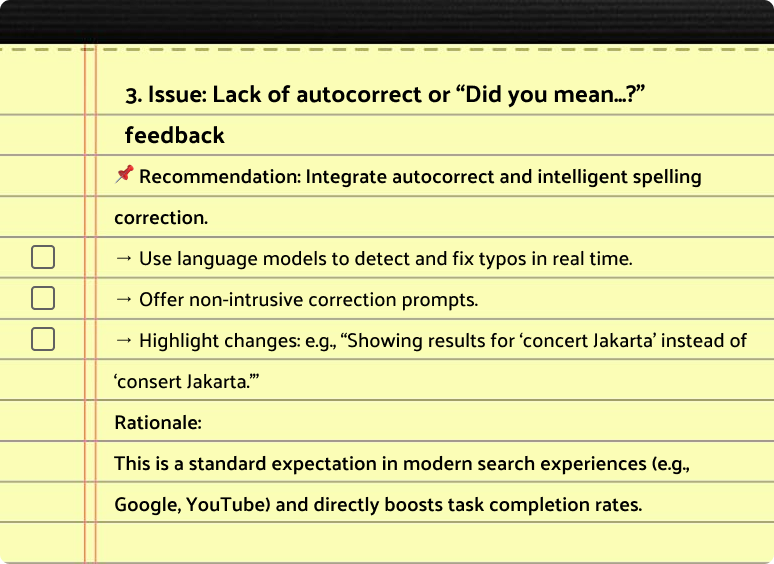
Add autocorrect/typo tolerance to increase first-try success rates.
Enhance language support, especially for complex scripts (e.g., Arabic, Burmese).
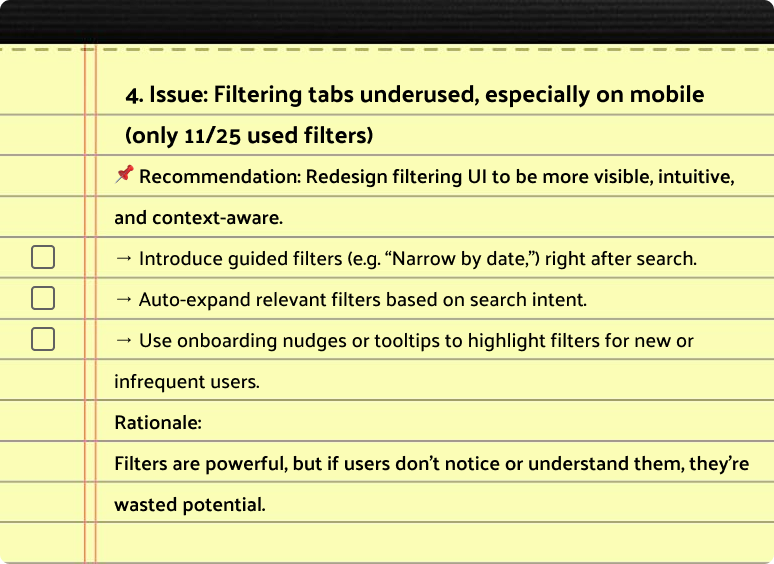
Highlight and simplify filtering options, especially on mobile.
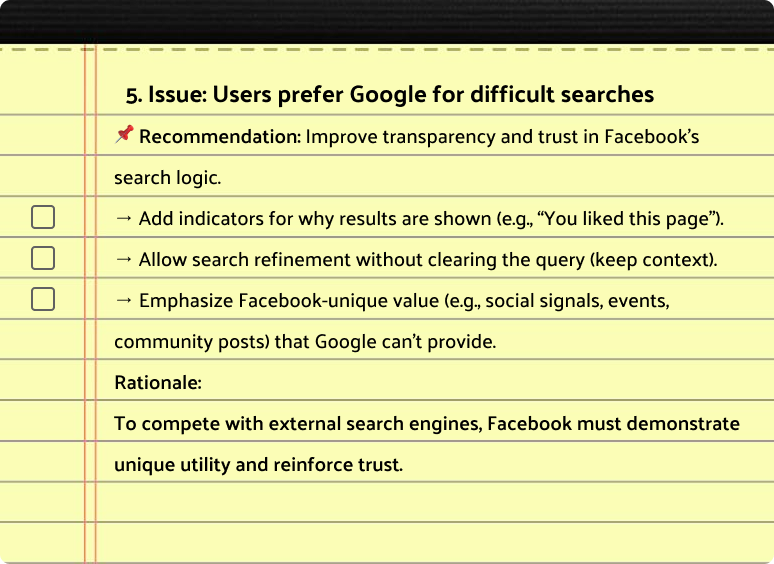
Address trust issues with search result sources—consider labels or credibility indicators.
Research Context
This research study was conducted in collaboration with Global App Testing (GAT), a QA testing and research agency with a global network of over 90,000 freelance testers. GAT specializes in delivering UX, localization, and functional testing data for clients worldwide, including major tech companies such as Facebook (Meta).
Partnership and Team Structure
For this project, GAT supported Facebook in executing a cross-cultural UX research study focused on improving the Search experience on Facebook across five diverse regions: Vietnam, Myanmar, Egypt, Germany, and Indonesia.
The collaboration involved two key teams within GAT:
UX Research Team (2 our of 5 UX researchers):
Responsible for research design, participant screening, interviews, analysis, and reporting.Sourcing Specialists Team (1 out of 4 sourcing specialists):
Focused on recruitment, managing outreach and gathering an initial pool of potential candidates based on Facebook’s study criteria.
The study leveraged GAT’s unique global testing capabilities to uncover how cultural, linguistic, and regional factors impact search behavior on Facebook. By combining rigorous research methods with culturally nuanced recruitment, the project aimed to deliver actionable insights for improving Facebook’s global search functionality - especially in underrepresented markets.

Research goals
-
Identify how users from different countries (Vietnam, Myanmar, Egypt, Germany, Indonesia) approach various types of searches on Facebook.
Explore differences in expectations, strategies, and confidence levels when performing searches in their local languages.
-
Assess the success rate and perceived ease of four common search tasks:
A recently seen post
Local news
An event of interest
A person to connect with
-
Investigate challenges related to search functionality, such as:
Keyword selection
Autocomplete and autocorrect behavior
SERP layout and filtering
Handling of local language input and script compatibility
-
Examine how local language settings and cultural communication styles impact:
Search result accuracy and relevance
Trust in sources
User expectations and mental models description
-
Surface opportunities to improve Facebook Search through:
Better language support
Enhanced filtering and suggestion systems
Culturally adaptive design elements

Methodology
-
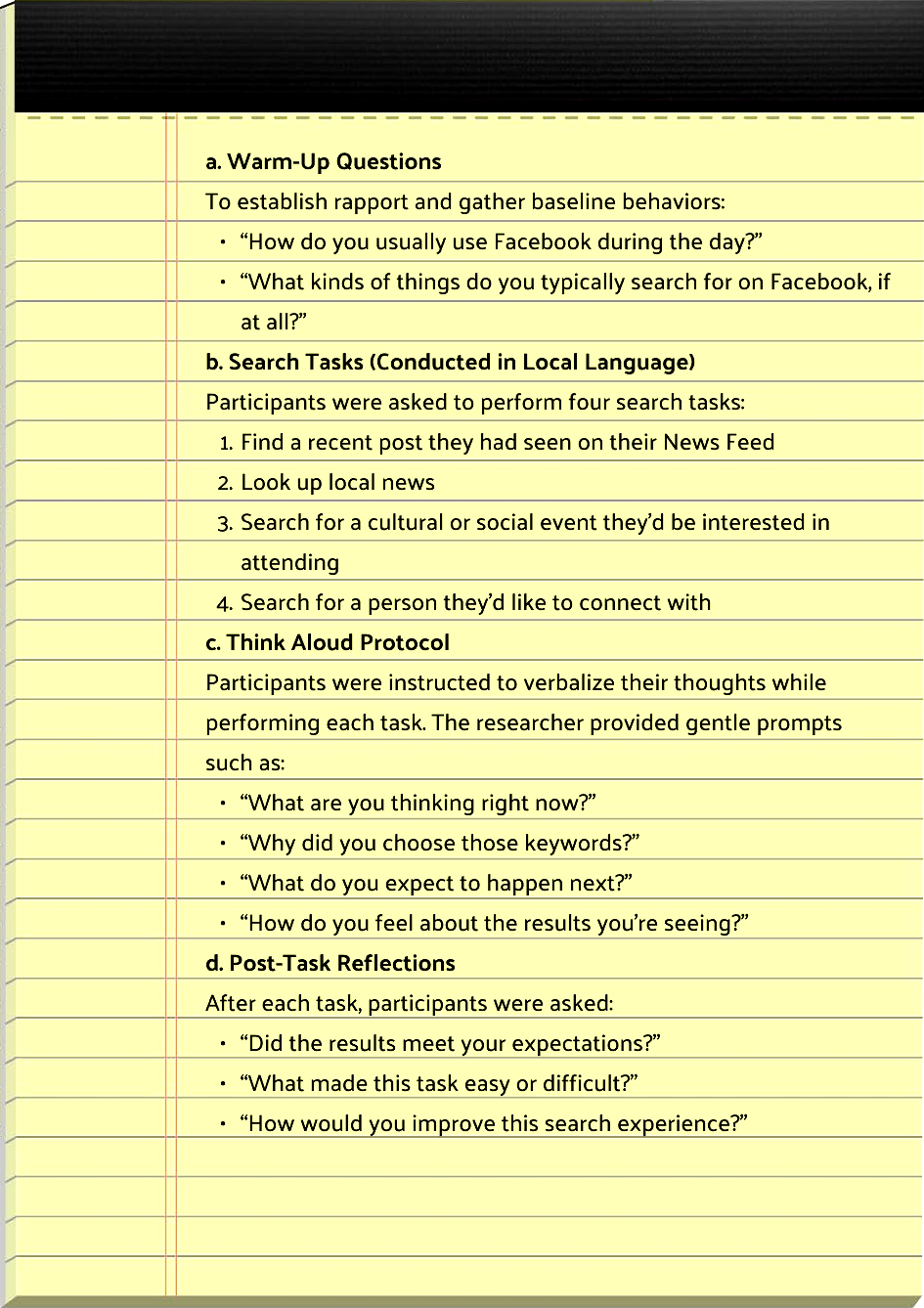
This research study used a qualitative, task-based approach involving individual user interviews and the Think Aloud protocol. The research team was comprised of two researchers (me and another colleague), who took turns taking notes and performing the interview.
-
Total Participants: 25
Countries Represented: Vietnam (5), Myanmar (5), Egypt (5), Germany (5), Indonesia (5).
Selection Criteria:
Age: 18 years or older
Regular Facebook users (minimum 3x per week)
Comfortable using both mobile and desktop versions of Facebook
Pre-screened for basic conversational English proficiency to ensure communication during interviews.
-
Participants were recruited through local research agencies and online communities using the following criteria:
Demographic balance: Gender and age groups (18–30, 31–45, 46+)
Tech fluency: A mix of casual and more tech-savvy users
Language background: Native speakers of the respective country’s primary language
Consent: All participants gave informed consent to be recorded and have their input used anonymously for research purposes
A short pre-screening questionnaire confirmed:
Frequency of Facebook use
Comfort with search-related tasks
Language proficiency (English & local language)
Access to a device with internet for remote interviews
-
All interviews were conducted via Zoom, with screen sharing enabled
Tasks were performed on participants' own devices in a naturalistic setting
Sessions were video recorded and transcribed for analysis
Research results
1. Task-Based Performance Insights
a. Task 1: Search for a recently seen post
Low confidence and rare behavior: 15/25 participants expressed doubt in finding the post; many had never attempted this before.
Success rate: 64%
Challenges:
Difficulty remembering exact phrasing or keywords
Mixed content types in results (e.g., posts, images, videos) made it harder to scan
SERP perceived as “random” and “cluttered”
User feedback:
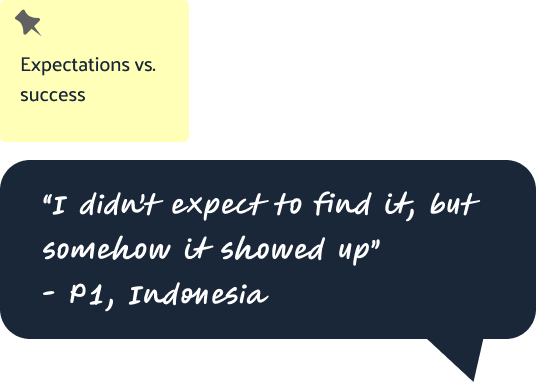
“I was pleasantly surprised, I was not expecting to find what I was looking for” – P1, Indonesia
b. Task 2: Search for local news
Higher expectations and familiarity: Participants found this easier due to clearer keyword choice and common use case.
Success rate: 72%
Observations:
Searches benefited from trending and viral news topics
14/25 participants voiced mistrust in news sources shown
User feedback:
“I wouldn’t normally read news articles published on this website” – P4, Germany
c. Task 3: Search for an event
Common task with moderate success: Many participants actively use Facebook to find or attend events.
Success rate: 64%
16/25 found the intended event
12/25 had to rephrase or adjust keywords
Filters helped but were underutilized
Notable finding: Some users assumed events would be “recommended” without needing a precise search.
d. Task 4: Search for a person
Most successful task: High familiarity and consistent usage across all countries.
Success rate: 84%
Challenges:
Nicknames and pseudonyms common in Myanmar and Indonesia
Inconsistent results when searching by partial names or transliterated spellings
2. Cross-Cultural & Language-Based Findings
a. Search input and results in local languages
Lower relevance and accuracy compared to English searches
Myanmar: Search results affected by Zawgyi vs. Unicode rendering issue; caused character corruption and incomplete result sets
Vietnam & Indonesia: Many users prefer setting Facebook to English, citing better content visibility and search result quality
Egypt: 10 out of 20 Arabic-language searches produced incomplete or no results; participants often switched to English
Germany: English vs. German did not affect result accuracy significantly
b. Blocked or limited content
Vietnam: Users mentioned possible content suppression due to defamation claims and regulatory blocks; made some topics difficult to search
Egypt: Arabic content sometimes failed to surface relevant results or produced formatting issues
c. Mental models & cultural communication styles
Germany: Expected direct, precise results; used filters early and confidently
Vietnam, Myanmar, Indonesia: Indirect communication styles influenced both expectations and feedback; more tolerant of partial results, but reluctant to criticize
Egypt: Verbose but indirect; voiced distrust in sources but avoided direct negative feedback




Recommendations based on key pain points


Impact and learnings
Research impact
Informed product decisions for global audiences
The study provided Facebook with detailed, country-specific insights into how users from Vietnam, Myanmar, Egypt, Germany, and Indonesia interact with Search. These findings helped shape decisions for improving search functionality in emerging markets where language, infrastructure, and user behavior may differ from the US market.
Improved UX strategy for local language support
The research highlighted critical issues related to language rendering (e.g., Zawgyi vs Unicode in Myanmar), poor Arabic character handling, and blocked content in Vietnam, leading to new discussions on improving localization and typography handling.
Validated need for search UX enhancements
The study validated user frustration with existing Search mechanics—such as lack of autocomplete accuracy, no autocorrect, and underutilized filters—prompting Facebook to prioritize UX improvements for search discoverability, especially on mobile.

Key learnings
Search confidence varies by task and culture
Users felt least confident when searching for recently seen posts, a task rarely performed and poorly supported. In contrast, searching for people had high success rates due to familiarity and habitual usage. Cultural communication styles and expectations of credibility need to be taken into consideration when designing experiences.
Functional Gaps Undermine Trust
Missing features like autocorrect, search term suggestions, and intelligent result grouping caused users to give up quickly or resort to Google, showing that search trust is fragile and easily lost. Moreover, if filters aren’t discoverable enough, they may as well be invisible (especially on mobile).
Localization requires cultural understanding and technical support
Localization issues are not just about translation, they involve text rendering, character encoding, and even the sociopolitical environment of the country, all of which can severely influence the user experience and skew results.

Reflections
Working as a UX Researcher at Global App Testing, supporting Facebook as an external consultant, gave me valuable perspective on the unique impact and limitations of working outside an in-house team.
I found myself particularly invested in the outcomes of this study and eager to see our recommendations come to life. It was a moment of reflection: while the consultant role offers reach and variety, I realized how much I value being embedded within a product team, where there’s greater visibility into how insights evolve into real user-facing changes.
However, seeing how the Facebook UX teams work to defined success criteria for a research study was incredibly valuable experience and I appreciated the insight into how product decisions are made in such a demanding environment.
I also became aware of the importance of diversity in user pools - it is essential for UX research because it ensures that insights reflect the experiences, needs, and behaviors of a broad and representative audience. Including users from different cultural backgrounds, languages, age groups, abilities, and tech environments helps uncover edge cases, usability barriers, and localized expectations that might otherwise go unnoticed.
